Speaking
I speak from the seat, not the sideline.
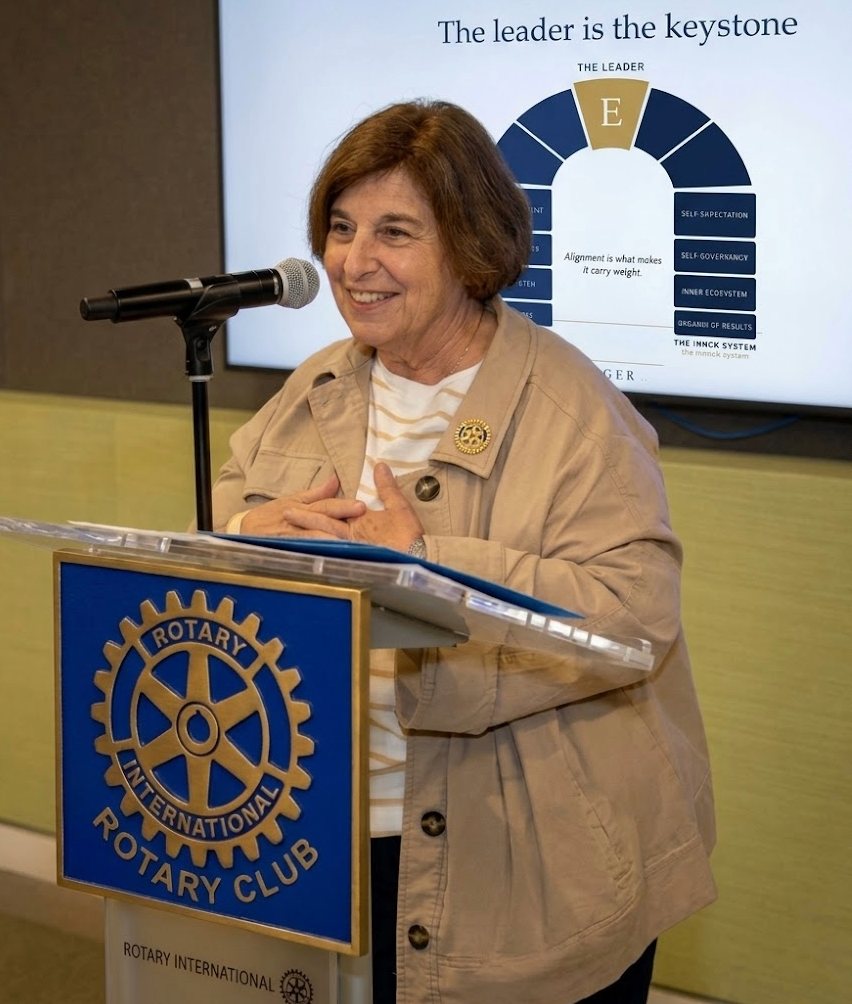
I started an organization in 1993 and ran it for more than thirty years. I was the CEO, the chief fundraiser, and the person who had to stand up on the hardest week of somebody’s life and say something true. I have since led two more organizations, one as chief executive and one as interim executive director, walking into somebody else’s unfinished business. And I have chaired or presided over six boards, which means I have also been the person the chief executive answers to.
Everything I say from a platform, I have had to do on a Monday morning.
That’s the difference you’re buying. The EGER Framework isn’t something I studied. It’s something I needed.
I don’t perform a keynote. I have a conversation with the room, and I would rather leave four hundred people with one thing they’ll still be arguing about at dinner than a standing ovation they forget in the parking lot.
The talks I am often asked for
These are starting points, not a menu. Every talk is shaped for the room, and if your group needs something else, tell me what it is.
| Talk | Who it is for | The takeaway | Length |
|---|---|---|---|
| Leadership | |||
| The Leader Is the Keystone | Executive teams, leadership conferences, board retreats | A leader can be performing well and losing authority at the same time. | 45–60 min; 90-min workshop |
| Living Bravely | Associations, healthcare and mission-driven organizations, teams after a hard year | Courage and resilience are not abstractions. They are lived. | 45 min, plus Q&A |
| Moral Courage When the World Is Loud | Civic and interfaith gatherings, associations, public-sector convenings | Ethical drift happens in fifty small decisions nobody logged. | 30–45 min |
| The Only One in the Room | Women’s leadership programs, first-generation leader cohorts, civic groups, executive teams | This is not a talk about diversity. It is a talk about authority. | 45 min |
| Identity and community | |||
| Gender, Sexuality, and the People You Lead | Leadership teams, HR and inclusion programs, women’s leadership programs, employee resource groups | Most leaders have already had the conversation they weren’t ready for. | 30 min; 60–90 min workshop |
| Pride, and What It Cost | Corporate and civic Pride Month events, employee resource groups, associations | The history most Pride events skip. | 40 min, plus 20 min Q&A |
| Antisemitism After October 7 | Jewish employee resource groups, corporate leadership teams, interfaith and civic gatherings | No one should feel alone in the building. | 45 min, plus 15 min Q&A |
The Leader Is the Keystone
An arch stands because of one stone at its center, the stone that locks the two sides into strength. It is cut to fit. It is shaped, not born.
Most people arrive in a senior seat with a title and a congratulations, and nobody has ever explained what the seat actually holds. So they work harder. And here’s the part almost nobody says out loud: a leader can be performing well and losing authority at the same time. The numbers are fine. The reviews are fine. And somewhere in the building, decisions that used to come to them have quietly stopped coming, or never came at all.
This talk walks the room through the EGER Framework: Expectations, Governance, Environment, and Results, the four forces that either hold a leader up or grind them down, in the system around them and inside them. It shows people where the load is landing in their own organization. They recognize themselves fast, which is why the Q&A tends to run long.
Living Bravely
I I have lived through two plagues. I was a young rabbi in the early years of HIV/AIDS, burying men my own age faster than I could learn their names, and I led a congregation through COVID thirty years later. Courage and resilience are not abstractions for me. They are lived.
7 Principles for Living Bravely came out of that, written with my friend Rev. Neil Thomas across two traditions, his Christian and mine Jewish, because neither of us could do it alone and neither of us thought our own tradition had all of it.
The seven principles are practical rather than inspirational. This is not a talk about staying positive. It’s about what people actually do on the days they’re frightened and still have to lead, and it’s honest about the cost. People who have been through something recognize it immediately. People who haven’t are getting it before they need it, which is the better time.
Moral Courage When the World Is Loud
\Noise, confusion, chaos. Your people are bombarded with information and don’t know who to trust. And in leadership especially, there are very few places left where anyone can be fully authentic.
Leadership without moral and ethical structure drifts: toward ego, toward self-interest, toward what is merely expedient. Not usually in one dramatic decision. Usually in fifty small ones nobody logged.
This talk is about what ethical grounding actually looks like when it’s a Tuesday and the choice in front of you is genuinely hard. Moral courage is rarely a grand stand. It’s the next small decision, made right. It draws on rooms I’ve been in: presidents, prime ministers, and members of Congress, and just as many hours in city council chambers, where I currently serve on Austin’s Public Safety Commission. The city chamber taught me more than the state dinner did.
The Only One in the Room
For most of my career I was the only woman at the table, or the only gay person, and frequently both. Not occasionally. Structurally, for years at a stretch.
You learn things in that position you cannot learn anywhere else. You learn what authority is actually made of, because none of it was handed to you with the chair. You learn to read a room faster than the people who are comfortable in it. You learn the difference between being included and being counted. And you learn the expensive one: how much of your energy goes into managing other people’s comfort, and what it costs you to keep spending it.
This is not a talk about diversity. It’s a talk about authority: how it gets granted, how it gets quietly withheld, and how a person builds it from nothing when none of it came with the title. Everyone who was the first anything recognizes themselves in it immediately. So do the people who hired them and never quite understood why it was harder than it looked.
Gender, Sexuality, and the People You Lead
Most leaders were trained before this vocabulary existed, and most have already had a conversation they weren’t ready for: an employee coming out, new pronouns in an email signature, a manager asking what the policy is before there is one.
This talk covers what the terms actually mean, where authority is still quietly withheld from women and LGBTQ leaders, and what to say when the answer matters to the person in front of you. It’s practical rather than theoretical. People leave able to do things on Monday they couldn’t do on Friday.
Pride, and What It Cost
I officiated the first legal same-sex wedding in California in 2008. I was the first openly LGBTQ president of the Central Conference of American Rabbis. And I buried a generation of young men in the early years of AIDS.
This talk is the history most Pride events skip: what it actually took, who paid for it, and what courage looks like now that the parade has sponsors.
Antisemitism After October 7
I have spoken to corporate Jewish employee resource groups about antisemitism since October 7, and about what the 2025 Israel-Iran war meant for Jewish colleagues at work.
This talk is for the Jewish employee who feels alone in the building, and for the leaders who want to support them and aren’t sure how.
For congregations and community groups, there’s also a single class, Zionism: what it is and isn’t →
How I work with organizers
We talk first. A short call before anything is confirmed. I want to know what the group has been through this year, what the last speaker got wrong, and what you’re hoping people say in the hallway afterward.
I don’t give the same talk twice unchanged. The spine holds; the examples come from your world. If I’m speaking to hospital executives, the stories are about hospitals.
What helps me. A microphone I can move with, and house lights up far enough that I can see faces. I talk to people, not at a dark room. A lectern is fine, and I won’t use it.
I stay afterward. The conversation that matters usually happens by the coffee, and it’s never the one on the schedule.
I travel from Austin,Texas
Also available
Panels and moderation · Board retreat openings · Scholar in Residence weekends and clergy workshops → · Work with boards →
To book
When you reach out, tell me three things: the date, the place, and what this group has been through this year.
The third one shapes everything else.
Fees depend on travel, length, and whether it’s one talk or a day. Ask, and I’ll tell you right away.
Need a bio for your program or an introduction? Formal bio →